-
 Workshop | Insider Threat Detection Advances Using AIPORTSMOUTH, UK JULY 25, 2023
Workshop Title:
Insider Threat Detection Advances Using AI
Date:
July 25th, 2023 (GMT+1)
Organizer:
University of Portsmouth, UK
Keywords:
- Cybersecurity
- Artificial Intelligence
- Insider Threat
- Neural Networks
Workshop Chair:
Personal Bio:
Dr Stavros Shiaeles is a Reader in Cyber Security at University of Portsmouth, UK, Visiting Prof. at University of Peloponnese, Greece and Bharath University, India. He worked as an expert in cyber-security and digital forensics in the UK and EU, serving companies and research councils. His research interests span in the broad area of Cyber Security such as OSINT, Social Engineering, Distributed Denial of Service Attacks, Cloud Security, Insider Threats, Digital Forensics, Network Anomaly Detection and Malware mitigation.
He authored more than 100 publications in academic journals and conference, he chaired many workshops in IEEE well-known conference such as IEEE Service and NetSoft, he is a member of IEEE TCIIN Group and IEEE TCHS and currently he is co-chairing IEEE International Conference on Security and Resilience Series (IEEE CSR). He has co-edited two Cyber Security books, published by CRC Press on April 2021 and he is involving as Principal Investigator, leading University of Portsmouth research team, in European and local grants.
Further to his academic qualifications, he holds a series of professional certifications named EC-Council Certified Ethical Hacker (CEH), EC-Council Advance Penetration Testing (CAST611), ISACA Cobit 5 Foundation and a Cyberoam(Now acquired by Sophos) Certified Network and Security Professional (CCNSP), and he is an EC-Council accredited instructor providing professional certifications training on Cybersecurity and Penetration testing. It is worth mentioning, prior entering academia, he was in the industry, in which he has more than 10 years of experience, and he worked on various IT aspects and Cybersecurity
Workshop Committee Members:
Dr. Bendiab Gueltoum, Université Frères Mentouri Constantine 1 (UFMC1)
Dr. Julian Murphy, University of Portsmouth
Dr. Ella Haig, University of Portsmouth
Workshop Description:
Background:
Insider threat is currently one of the most significant security problems for institutions, businesses, and government agencies. This threat usually arises from users with authorised access to an organisation' system who use that access either maliciously or unintentionally, to cause data breaches and harms to the organisation. This user could be a current employee in the organisation or other business associate such as a consultant, a broad member, a former employee, etc. The insider actor can perform internal attacks intentionally for malicious purposes like espionage, disclosure of sensitive information or intellectual property theft. According to Panda Security, over the last two years, the number of insider incidents has increased by 47%. The cost of insider threats (related to credential theft) for organizations in 2020 is $2.79 million. Insider threat stats reveal that more than 70% of attacks are not reported externally and 85% of organizations say that they find it difficult to determine the actual damage of an insider attack.
Goal/Rationale:
The goal of the workshop is to provide attendees the required knowledge to be able to detect Insider Threats in their organization before is too late. As aforementioned Insider Threats is a major issue in the cyber security domain and is very difficult to tackle. This workshop will give fresh ideas and demonstrate ways that Insider Threats can be detected way before the disaster reach the organization.
Scope and Information for Participants:
The scope of the workshop on insider threats is to provide attendees with a comprehensive understanding of the malicious actors and how artificial intelligence could help to identify threats before it is too late. The workshop covers a wide range of topics, including:
1. Datasets available to be used
2. Machine learning algorithms and Bio-Inspired model
3. Data feature elimination
4. Collecting logs from multiple devices
5. Python Libraries available
The workshop is designed to be comprehensive, covering all aspects of insider threat detection. It is suitable for cybersecurity professionals with varying levels of experience, from those new to the field to those with advanced skills.
Highlights:
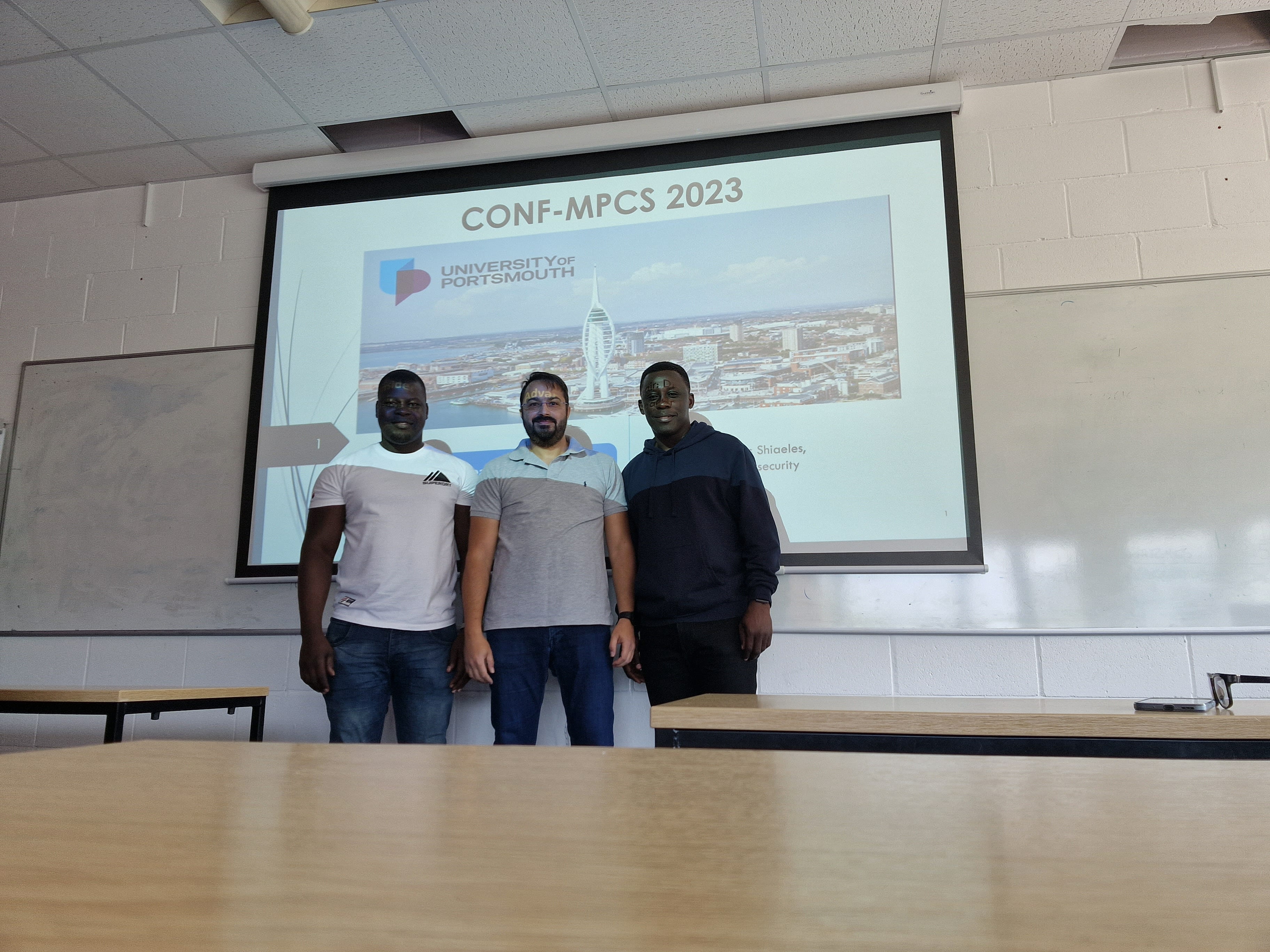
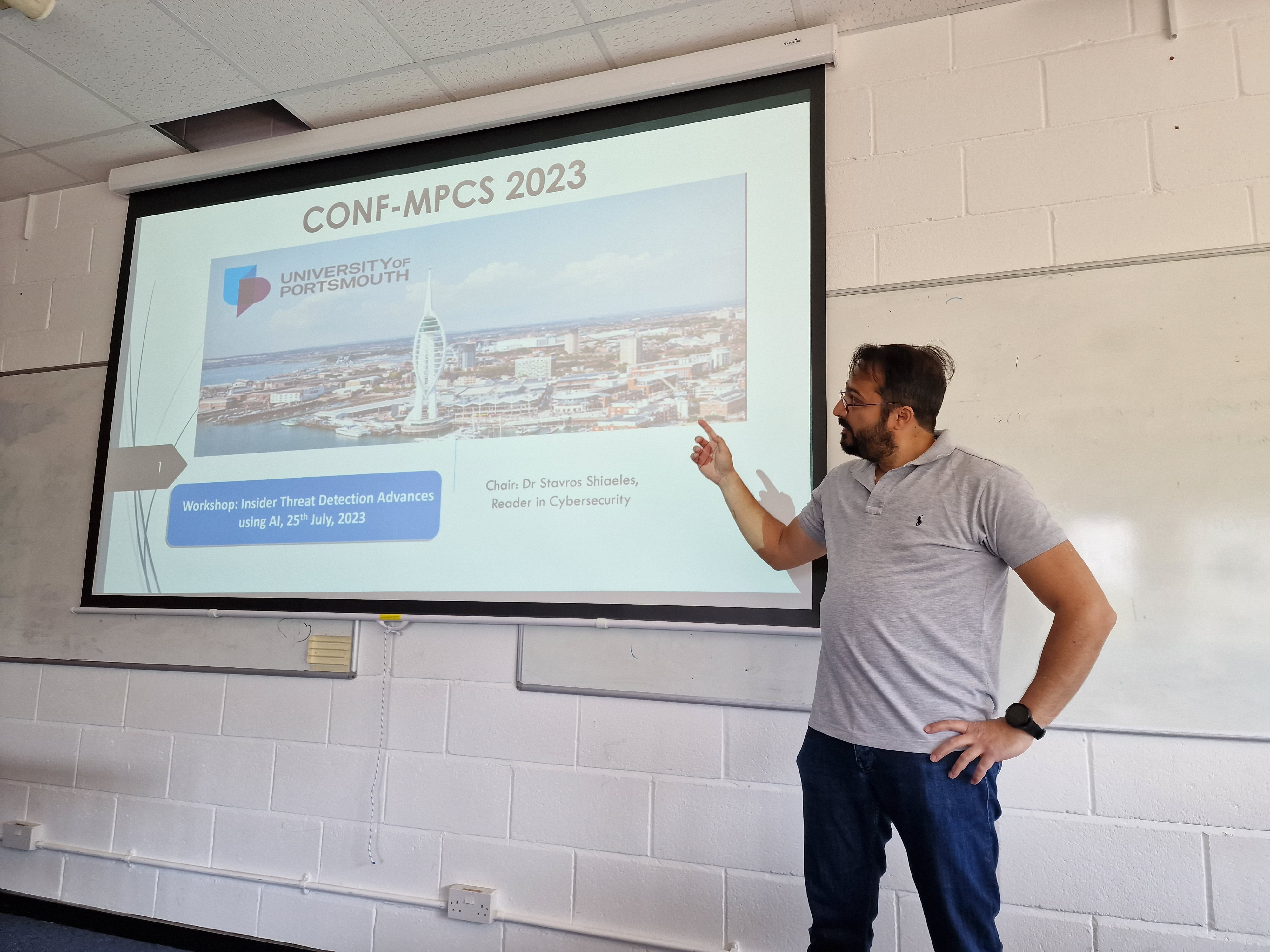
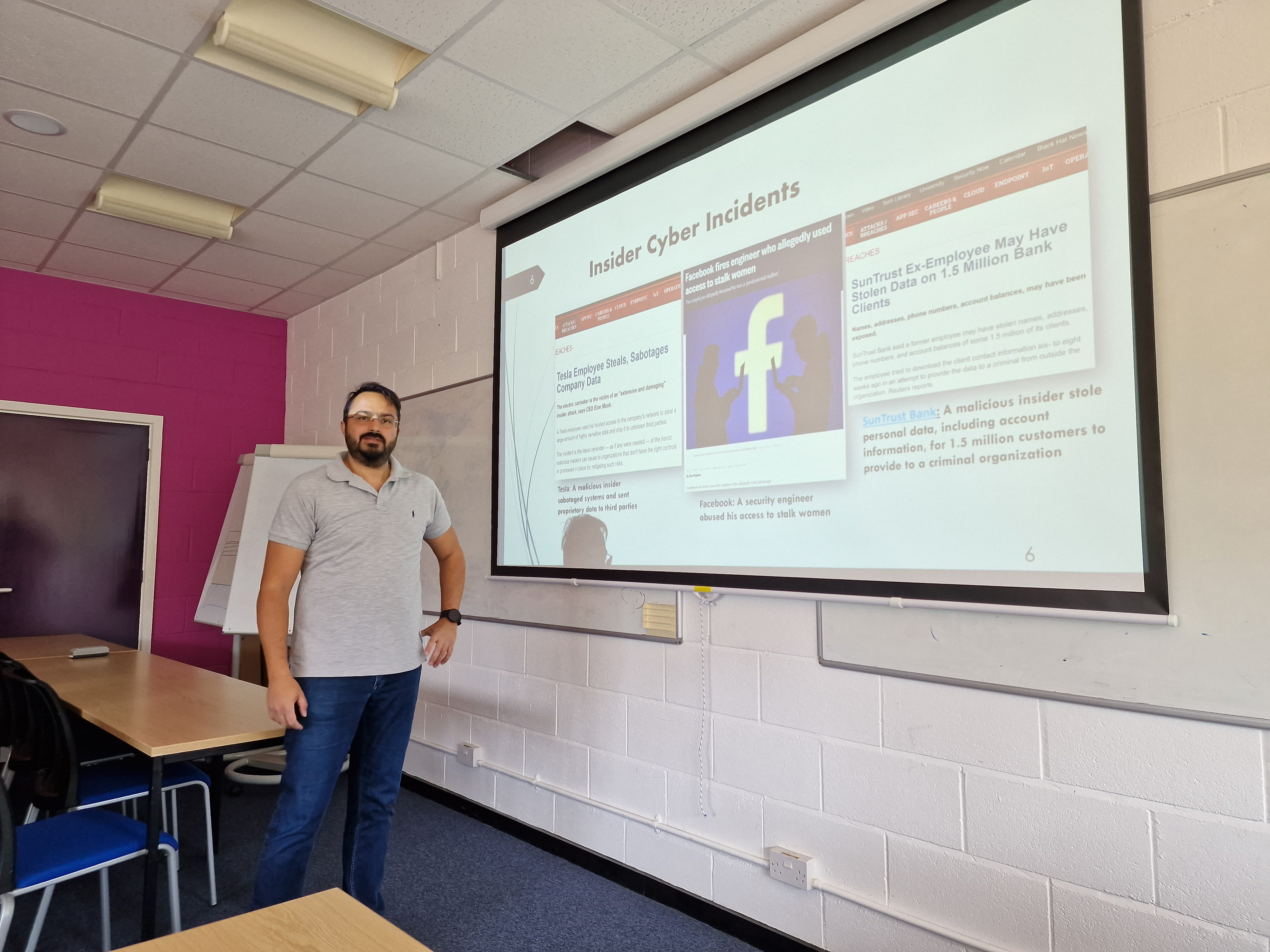

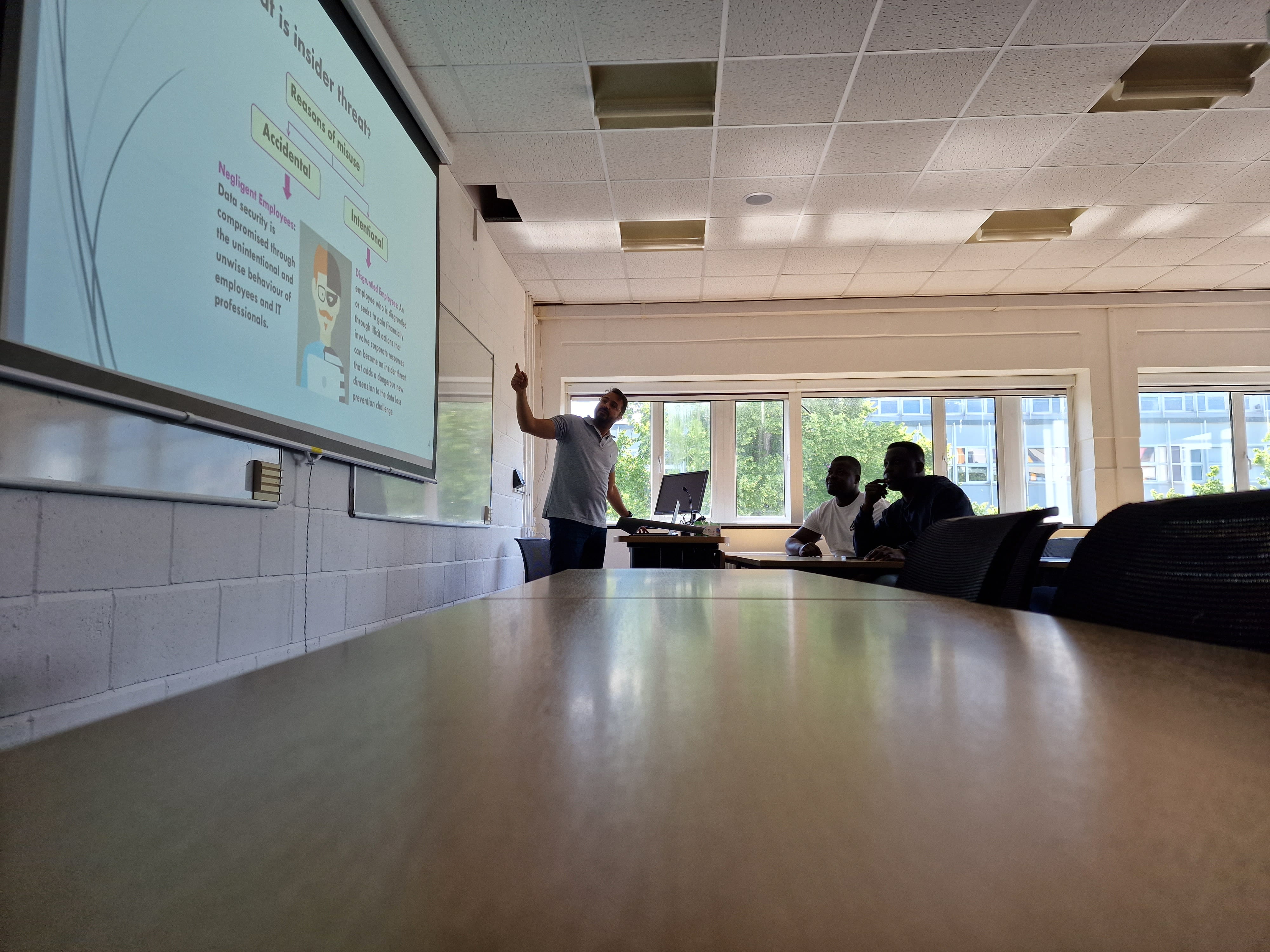
Insider threats represent a significant and complex challenge for security across various industries. Unlike external threats, which are easier to detect and defend against, insiders have intimate knowledge of an organization's systems, processes, and vulnerabilities. This familiarity allows them to exploit weaknesses, causing potentially devastating consequences.
The major issue with insider threats lies in the difficulty of early detection. Insiders may abuse their privileges for prolonged periods before their actions are noticed, making it harder to prevent data breaches, intellectual property theft, or sabotage. Moreover, insiders can bypass external security measures, using their legitimate access to infiltrate systems, making traditional defense mechanisms inadequate.
These threats can come from disgruntled employees, contractors, or partners with malicious intent, or even unwitting employees who fall victim to social engineering tactics. The financial and reputational damages resulting from insider breaches can be substantial, eroding customer trust and brand value. To address this issue, organizations must adopt a multi-layered security approach that combines advanced monitoring, strict access controls, behavior analysis, and employee education, minimizing the risk posed by insider threats.
The goal of the workshop is to provide attendees the required knowledge to be able to detect Insider Threats in their organization before it is too late. This workshop will give fresh ideas and demonstrate ways that Insider Threats can be detected way before the disaster reaches the organization.
Venue:
Buckingham Building, University of Portsmouth, Portsmouth PO1 3HE, UK

VISA:
Welcome to GOV.UK (www.gov.uk)
In order to ensure the information is correct and up to date, there may be changes which we are not aware of. And different countries have different rules for the visa application. It is always a good idea to check the latest regulations in your country. This page just gives some general information of the visa application.
UK Visa Information
What you need to do
- Check if what you plan to do in the UK is allowed as a Standard Visitor.
- Check you meet the eligibility requirements.
- Check if you need to apply for a visa to visit the UK.
- Apply for a Standard Visitor visa online - if you need one.
Check you meet the eligibility requirements
You must have a passport or travel document to enter the UK. It should be valid for the whole of your stay.
You must be able to show that:
- you'll leave the UK at the end of your visit
- you're able to support yourself and your dependants during your trip (or have funding from someone else to support you)
- you're able to pay for your return or onward journey (or have funding from someone else to pay for the journey)
- you'll not live in the UK for extended periods through frequent or successive visits, or make the UK your main home
Check if you need a visa to visit the UK
Depending on your nationality, you'll either:
- have to apply for a Standard Visitor visa before you travel to the UK
- be able to visit the UK for up to 6 months without needing a visa
You can check if you need a visa before you apply.
If you do not need a visa, you must still meet the Standard Visitor eligibility requirements to visit the UK. You may be asked questions at the UK border about your eligibility and the activities you plan to do.