-
 Workshop | Machine Learning: Integrating Machine Learning
Techniques to Advance Network SecurityConstantine, Algeria AUGUST 22, 2023
Workshop Title:
Machine Learning: Integrating Machine Learning Techniques to Advance Network Security
Date:
August 22nd, 2023 (GMT+1)
Organizer:
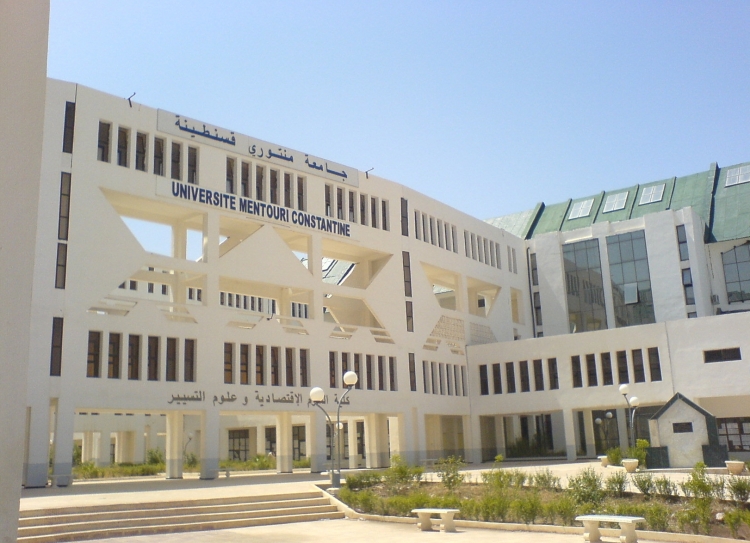
University of Frères Mentouri, Constantine, Algeria
Keywords:
- Machine learning
- Network security
- Integration
- Anomaly detection
- Threat intelligence
- Predictive analysis
- Data privacy
- Ethical considerations
- Practical implementation
- Risk mitigation
Workshop Chair:
Personal Bio:
Dr. Gueltoum Bendiab Academic career has consistently focused on Cyber Security and its application in several areas, including Cloud Computing, IoT, smart homes, smartphones, and vehicular networks. The research topics are covering aspects of Cyber Security related to trust and identity management, biometric authentication, Intrusion Prevention Detection and Response, Insider threats detection, Distributed Denial of Service Attacks, Malware detection and mitigation, and integrating Blockchain technology and Artificial Intelligence in Cyber Security.
She has established a respectable research record in cyber security, AI and Blockchain exemplified in the dozens of published papers and book chapters that have gained recognition among researchers and practitioners (more than 443 Google scholar citations thus far).
Dr. Gueltoum Bendiab has recently published an article on the possible application of an amalgamation of Blockchain and AI technologies for securing connected and Autonomous Vehicles. This article has been published on the IEEE Transactions on Intelligent Transportation Systems. Additionally, Dr. Gueltoum Bendiab is a reviewer at well-known journals and international conferences such as the IEEE Systems Journal, the Elsevier journal "Computer Networks", IEEE services workshops and the IEEE international conference on Cyber Security and Resilience, etc.
Dr. Gueltoum Bendiab is currently an Assistant Professor in the Electronics Department, Faculty of Sciences of Technology, at university of Frères Mentouri, Constantine, Algeria.
Workshop Description:
Background:
In today's digital landscape, where cyber threats are becoming increasingly sophisticated, organizations are constantly seeking innovative approaches to bolster their network security. One such approach is the integration of machine learning techniques, which hold great promise in detecting and mitigating emerging threats in real-time. The workshop titled "Machine Learning: Integrating machine learning techniques to advance network security" aims to explore the intersection of machine learning and network security, equipping participants with the knowledge and skills to leverage these technologies effectively.
During the workshop, attendees will delve into the fundamentals of machine learning and its application in the context of network security. They will gain a comprehensive understanding of various machine learning algorithms and how they can be employed to analyze network traffic, detect anomalies, identify patterns, and predict potential security breaches. Practical hands-on exercises and case studies will provide participants with valuable insights into the implementation and evaluation of machine learning models for network security.
Additionally, the workshop will focus on the challenges and considerations associated with integrating machine learning into existing security infrastructures. Participants will learn about data preprocessing, feature selection, model training, and validation techniques specific to network security applications. Ethical considerations and potential limitations of machine learning in the context of network security will also be discussed.
By the end of the workshop, attendees will be equipped with practical skills and strategies to enhance their organization's network security through the intelligent integration of machine learning techniques. They will gain the ability to develop custom machine learning models, deploy them in real-world scenarios, and continuously adapt and optimize them to address evolving cyber threats.
Goal/Rationale:
The goals of the workshop "Machine Learning: Integrating machine learning techniques to advance network security" are to:
1. Explore the Intersection: The workshop aims to explore the intersection of machine learning and network security, highlighting the potential of machine learning techniques to enhance and advance network security practices. Participants will gain a deep understanding of the principles, methodologies, and algorithms underlying machine learning and its application in the context of network security.
2. Build Technical Skills: The workshop focuses on equipping participants with practical skills and knowledge to effectively integrate machine learning into network security practices. Attendees will engage in hands-on exercises and case studies to develop proficiency in implementing and evaluating machine learning models for network anomaly detection, threat identification, and predictive analysis.
3. Foster Collaboration and Knowledge Sharing: The workshop provides a platform for networking and collaboration among industry professionals, researchers, and practitioners in the field of network security. Participants will have the opportunity to share insights, best practices, and real-world experiences, promoting a collaborative environment that fosters learning and innovation.
4. Address Challenges and Considerations: The workshop acknowledges the challenges and considerations involved in integrating machine learning into network security. Participants will gain insights into data preprocessing, feature selection, model validation, ethical considerations, and limitations specific to network security applications. The goal is to provide a holistic understanding of the complexities involved and equip attendees with strategies to overcome challenges and make informed decisions.
5. Empower Participants: Ultimately, the workshop aims to empower participants with the knowledge, skills, and confidence to leverage machine learning techniques effectively in their network security efforts. By the end of the workshop, attendees will be equipped to develop customized machine learning solutions, enhance their organization's network security posture, and stay ahead of emerging threats.
Scope and Information for Participants:
The workshop on "Machine Learning: Integrating machine learning techniques to advance network security" has a comprehensive scope that covers various aspects of machine learning and its application in the domain of network security. The scope includes:
1. Fundamentals of Machine Learning: The workshop begins with a strong foundation in machine learning, covering key concepts, algorithms, and methodologies. Participants will gain a clear understanding of supervised and unsupervised learning, feature engineering, model training, and evaluation techniques.
2. Network Security Concepts: The workshop explores the fundamental concepts of network security, including common attack vectors, network protocols, and security measures. This ensures participants have a solid understanding of the context in which machine learning techniques can be applied to enhance network security.
3. Machine Learning for Anomaly Detection: The workshop delves into the use of machine learning algorithms for anomaly detection in network traffic. Participants will learn how to leverage machine learning models to identify and flag abnormal behaviors, potential intrusions, and suspicious activities within network environments.
4. Threat Intelligence and Predictive Analysis: The scope extends to leveraging machine learning for threat intelligence and predictive analysis in network security. Participants will gain insights into utilizing machine learning techniques to identify patterns, predict potential security breaches, and enable proactive security measures.
5. Practical Implementation and Case Studies: The workshop provides hands-on experience through practical exercises and case studies. Participants will have the opportunity to apply their knowledge and skills to real-world scenarios, gaining practical insights into implementing machine learning models for network security.
6. Challenges and Ethical Considerations: The scope also addresses the challenges and ethical considerations associated with integrating machine learning in network security. Participants will explore issues such as data privacy, bias, explainability, and ensuring the responsible use of machine learning in security applications.
By covering these diverse topics, the workshop offers a comprehensive scope that equips participants with the knowledge, skills, and practical experience to effectively integrate machine learning techniques into network security practices.
Venue:
BP, 325 Route de Ain El Bey, Constantine, Algeria

VISA:
Algeria Visa Types, Requirements, Application
Complete guide to obtaining a visa to Algeria
What Are the Algeria Visa Document Requirements?
When you submit an Algeria visa application, you must have the following required documents:
- Your original passport, which must be valid for at least another six months from the time you enter Algeria. It must have at least one blank page to affix the visa in.
- Photocopy of your passport's relevant pages (some consulates may require you to submit photocopies of all the pages on your passport, even empty ones).
- Algeria Visa Application Form, completed and signed. If the applicant is a minor, the parent or legal representative has to sign the application form. You can download the application form from the consulate or embassy's website.
- Invitation Letter, which can be issued by your Algerian host (if you have one) or an Algerian travel agency. The invitation letter has to be notarized at the city hall in Algeria or at a notary public office.
- Copy of your host's ID, passport or consular card (if applicable).
- Proof of employment status: letter from your employer, company documents, if self-employed, etc.
- Proof of financial means, in the form of bank statements or payslips.
- Reserved flight ticket or flight itinerary.
- If you apply by mail, include a pre-paid, self-addressed envelope for the embassy/consulate to return your passport and documents.
- If you apply by a proxy, include a notarized letter of authorization to apply on your behalf.
- Proof of Algeria visa fee payment, as per the embassy/consulate's requirements.
- In cases of visa applications for minors, include a letter of consent from the parent/s or legal guardian/s, stating they agree for the child to travel alone.
How Can I Submit an Algeria Visa Application?
You can submit an Algeria visa application in one of the following ways:
- Yourself, by appearing at the Algerian consulate/embassy in person and handing in the required documents.
- By mail or courier. Make sure you use a safe postal service because you'll be sending important documents.
- Through a proxy, to whom you must give a notarized letter of authorization, stating you consent to them applying on your behalf
- Through an authorized visa application agency
However, before you submit the application, make sure you know the requirements of the consulate or embassy who will handle your application. Not all consulates accept document submission in all the aforementioned methods.
Algeria Visa Application
The Algerian visa application process is as follows:
1. Visit the website of the Algerian embassy or consulate in which you will be lodging your visa application to learn about appointment requirements, work days, and opening hours.
2. Make an Algerian visa appointment. Depending on the consulate, you may be able to do this online.
3. Complete the Algeria visa application form.
4. Gather the necessary documents for the Algeria visa (see "Alegria visa requirements" below) and submit them on the date of your appointment. When you submit the documents, you may be asked several questions regarding the purpose of your trip, what you'll be doing in Algeria, or personal questions, such as your job, salary, etc.
5. Pay the Algeria visa fee.
6. Wait for the visa to be processed. When the decision is made, the embassy or consulate will notify you of the decision.
7. If approved, the consular/embassy staff will contact you to go and get your passport with the afixed visa. If you applied by mail, they will mail you back your passport with the visa affixed. Your visa states the date in which you will be allowed to enter the country.
How Long Does it Take to Get an Algeria Visa?
The Algeria visa processing time depends on the type of visa you're applying for, the county you are applying from, and the specific embassy or consular office.
However, it usually takes about 10-20 working days to process an Algerian visa. However, to make sure, inquire with the embassy or consulate in which you are applying. If you are applying by mail, the processing time will be longer.
If you submitted any wrong documents, it may cause the processing time for your visa to be delayed, or even for the application to be denied.