-
 Workshop | Multi-Agent Reinforcement LearningBATH, UK AUGUST 8, 2023
Workshop Title:
Multi-Agent Reinforcement Learning
Date:
August 8th, 2023 (GMT+1)
Organizer:
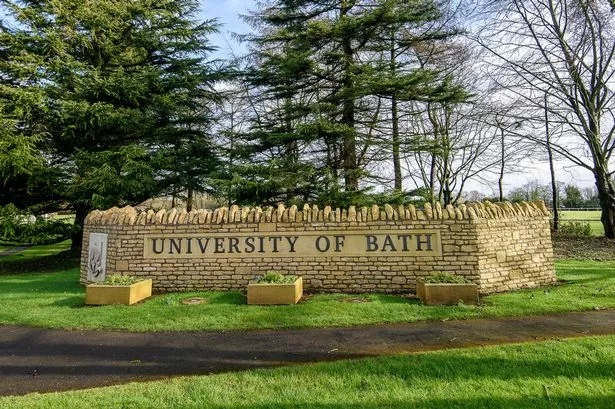
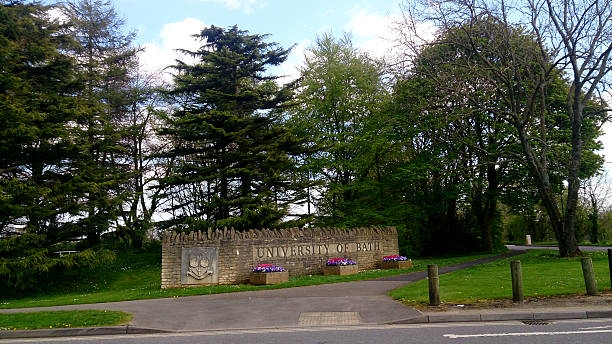
University of Bath
Keywords:
- Multiagent Systems
- Reinforcement Learning
- Markov Decision Process
- Policy Learning
- Value Function Approximation
- Communication in Multiagent Systems
- Coordination and Collaboration
- Joint Action
- Multiagent Planning
- Game Theory
- Decentralized Decision-making
- Adversarial Learning
Workshop Chair:
Personal Bio:
Dr. Zhang's research situates the interface between computer science and economics. He is interested in understanding and characterizing the incentives of self-interested agents in competitive and cooperative environments. He analyses agents' decision-making processes and aligns their incentives with the objectives of a system designer by analytical methods. Ultimately, he evaluates and improves system performance in their equilibrium stages, under worst-case guarantees and beyond worst-case scenarios. He has publications in leading journals and peer-reviewed conferences spanning the fields of artificial intelligence, theoretical computer science, and mathematics. As the sole Investigator, Dr. Zhang has been awarded research grants by The Leverhulme Trust and EPSRC.
Workshop Description:
Background:
Multiagent reinforcement learning (MARL) is a subfield of artificial intelligence (AI) and machine learning that focuses on developing algorithms and techniques for agents to learn and make decisions in a collaborative or competitive multiagent environment. The research in MARL has gained significant attention due to its potential applications in various domains, including robotics, autonomous vehicles, game theory, social simulations, and multi-robot systems.
Over the years, researchers have explored different approaches in MARL, including centralized and decentralized control, cooperative and competitive scenarios, communication and coordination strategies, and learning algorithms tailored for multiagent settings. Cooperative MARL aims to develop agents that work together towards a common goal, sharing information and resources. On the other hand, competitive MARL focuses on situations where agents have conflicting objectives and may engage in strategic behavior to outperform others. Communication and coordination mechanisms play a crucial role in MARL. Agents can exchange information, negotiate, or use explicit communication channels to enhance collaboration or competition.
Goal/Rationale:
This workshop will bring together researchers, practitioners, and industry professionals to discuss the latest research, technologies, and applications of MARL. It will provide a platform for them to share their latest findings, ideas, and ongoing work. The workshop provides opportunities for participants to meet and network with colleagues, establish collaborations, and build professional relationships. We expect to explore emerging trends and topics, identify research gaps, and brainstorm potential solutions or directions for future investigations. Finally, the workshop will contribute to forming and strengthening research communities by bringing together like-minded individuals who aim to develop intelligent and adaptive agents that can effectively navigate complex multiagent systems.
Scope and Information for Participants:
1. Multiagent Reinforcement Learning in Social Networks. This includes influence and opinion dynamics in social networks, opinion formation and social learning in multiagent systems, recommendation systems using MARL techniques, and analysis of social networks using MARL models.
2. Multiagent Communication and Coordination. This includes learning communication protocols among agents, coordination mechanisms in large-scale multiagent systems, and distributed decision-making and consensus in multiagent environments.
3. Multiagent Reinforcement Learning Algorithms and Techniques. This includes value function approximation, exploration and exploitation strategies, multiagent policy gradient methods and optimization techniques.
4. Real-World Applications of MARL. This includes multi-robot systems and swarm robotics, social simulations and modeling of human behavior, resource allocation and optimization in complex systems.
Venue:
University of Bath, Claverton Down, Bath BA2 7AY, UK
Highlights:
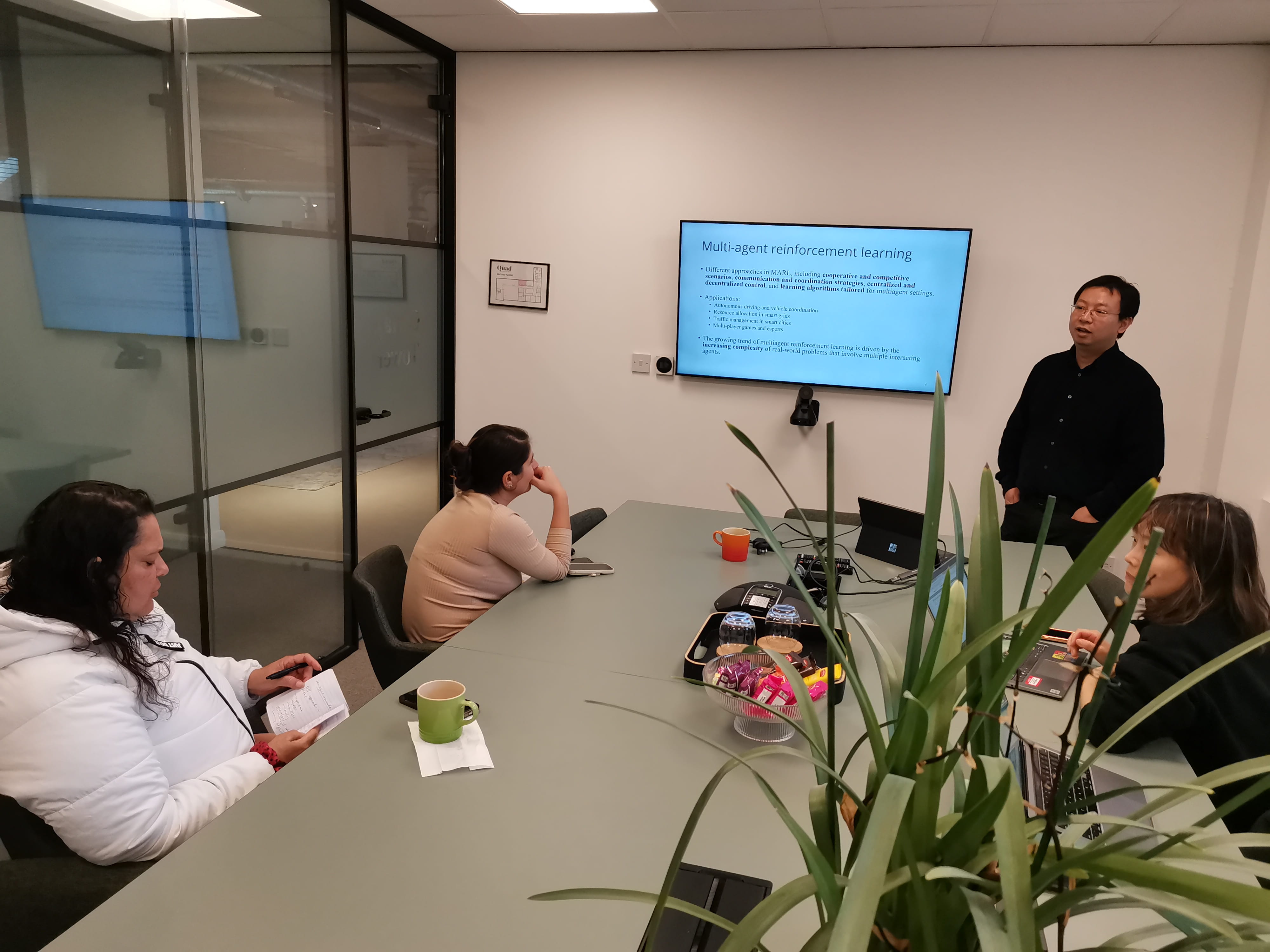
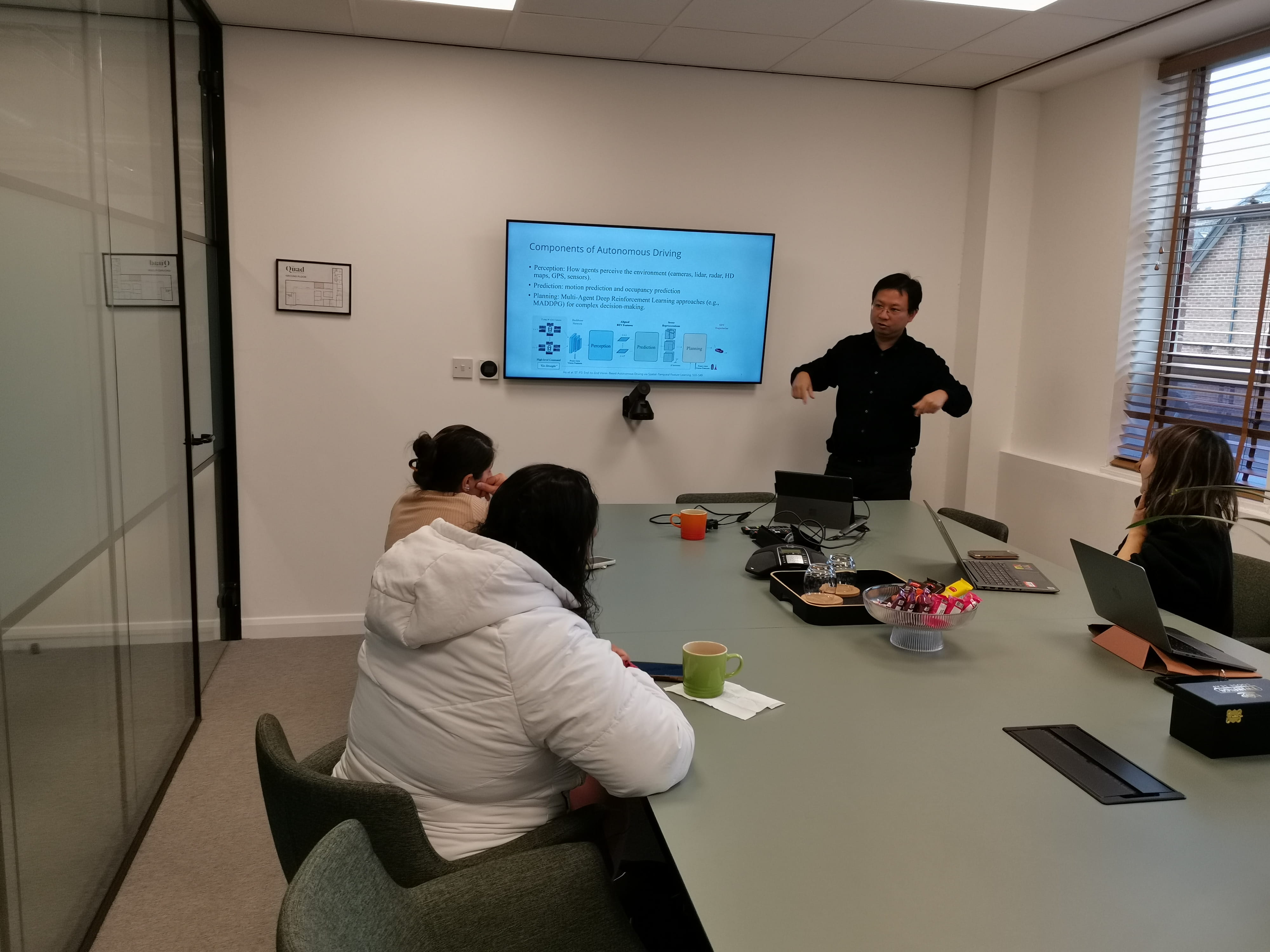
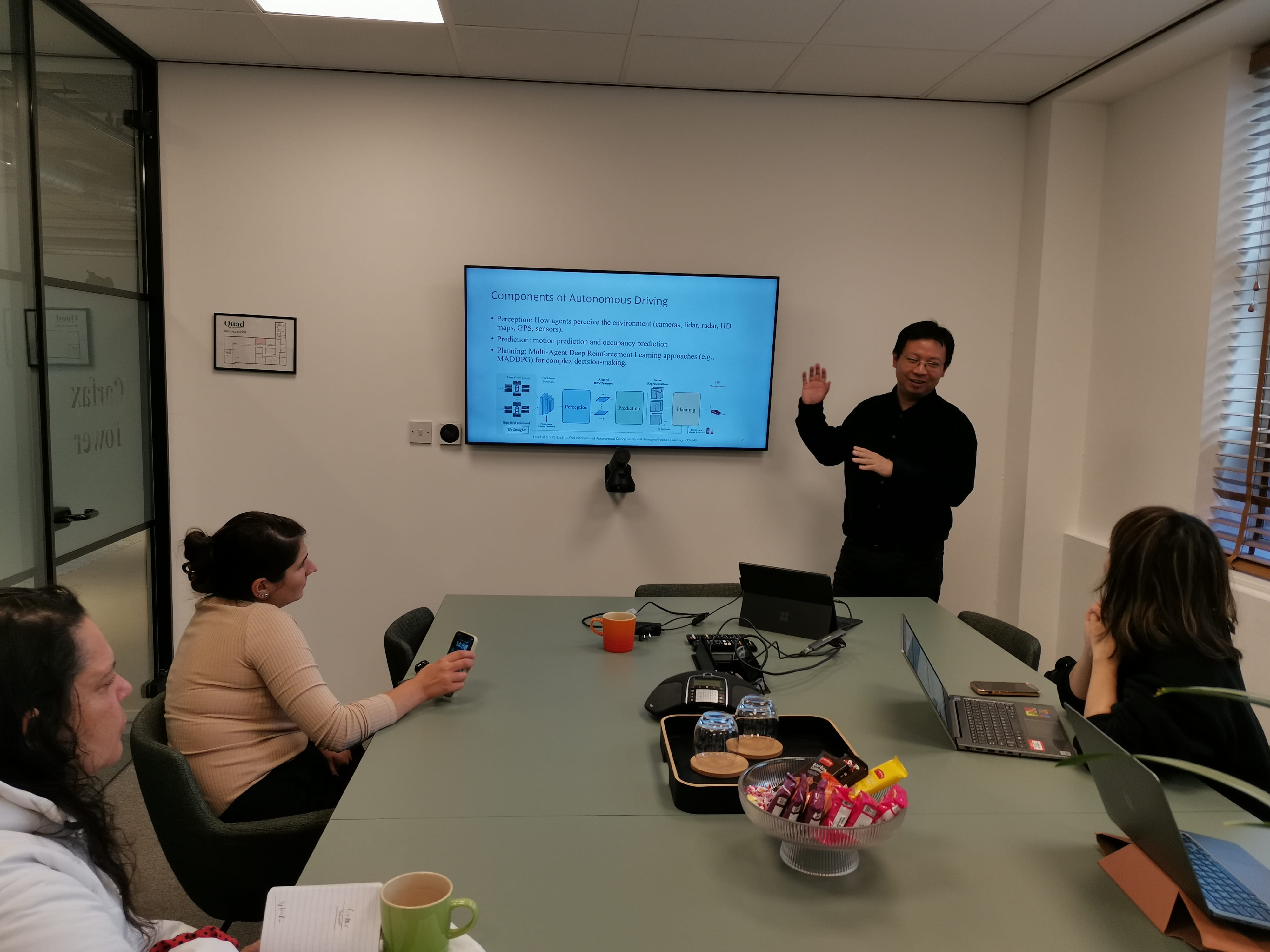
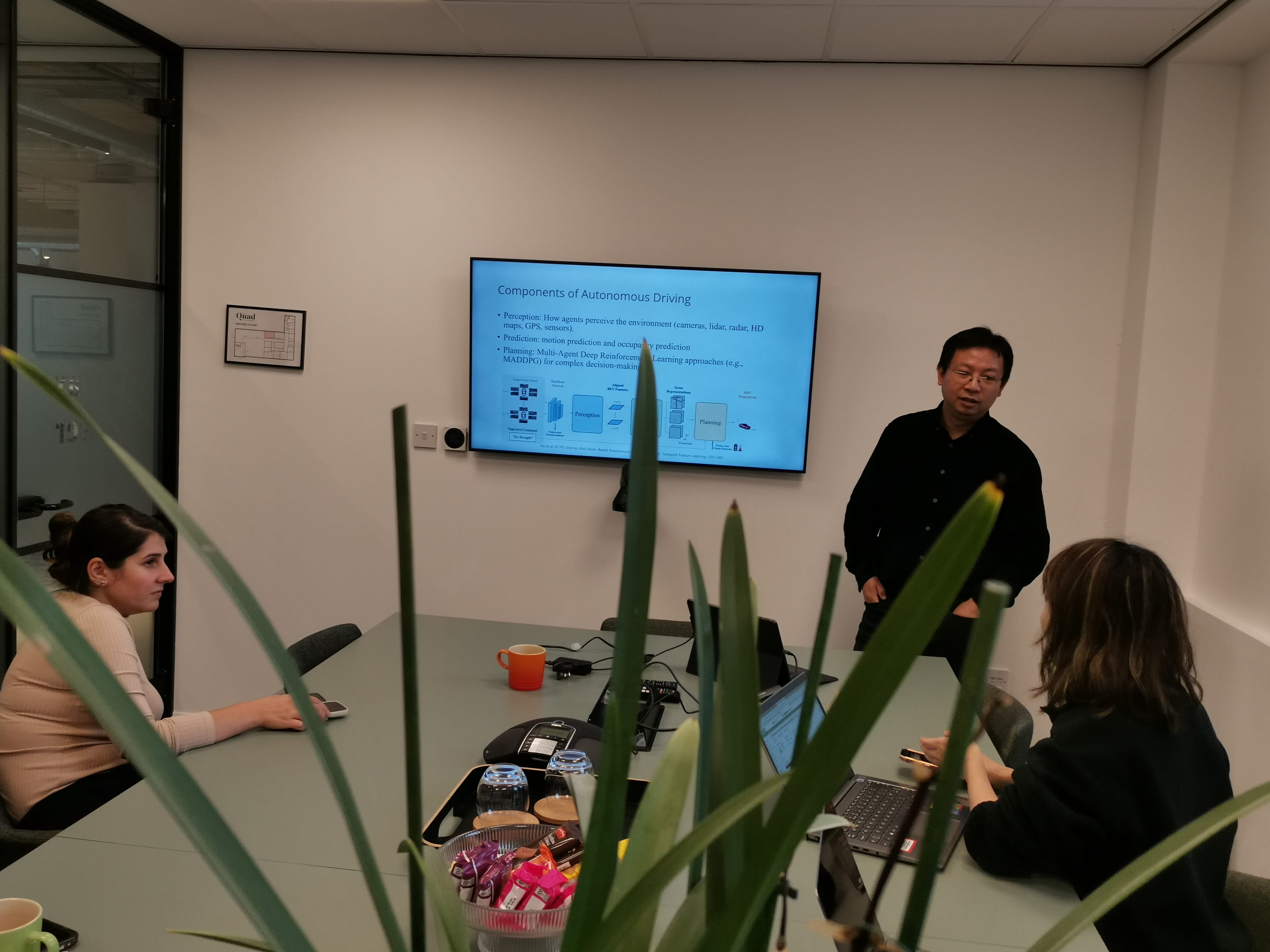
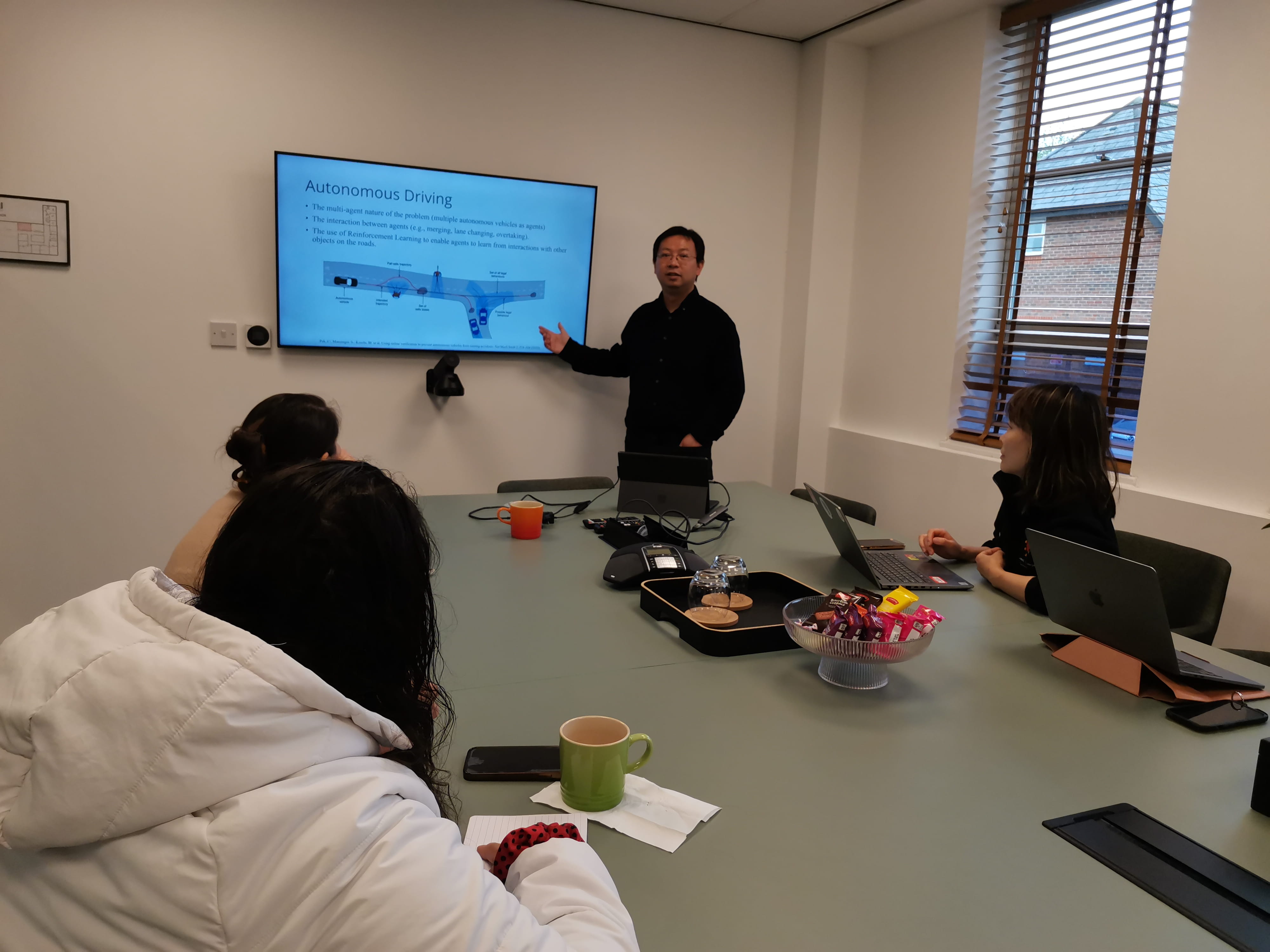
The workshop brought together researchers, practitioners, and enthusiasts in the field of artificial intelligence and machine learning to delve into the challenges and advancements in multiagent reinforcement learning (MARL). The workshop aimed to foster knowledge exchange, collaboration, and discussion about the latest developments and applications of MARL in various domains.The workshop highlighted the significance of MARL in modeling real-world scenarios where multiple agents interact, cooperate, and compete to achieve collective goals. The speakers emphasized the potential of MARL in addressing complex challenges across domains such as autonomous driving, robotics, economics, and more.The workshop featured a series of engaging sessions, each focusing on different aspects of multiagent reinforcement learning. A lively panel discussion featured experts from academia and industry, who debated the potential societal impacts of widespread MARL adoption. Ethical considerations, responsible AI, and potential regulatory frameworks were among the key topics discussed. Throughout the workshop, attendees had opportunities to connect during coffee breaks and collaborative activities. These interactions facilitated networking and sparked new collaborations among attendees with diverse backgrounds and expertise.
Access to Workshop:
CONF-MPCS 2023 Workshop -- Bath - YouTube
VISA:
Welcome to GOV.UK (www.gov.uk)
In order to ensure the information is correct and up to date, there may be changes which we are not aware of. And different countries have different rules for the visa application. It is always a good idea to check the latest regulations in your country. This page just gives some general information of the visa application.
UK Visa Information
What you need to do
- Check if what you plan to do in the UK is allowed as a Standard Visitor.
- Check you meet the eligibility requirements.
- Check if you need to apply for a visa to visit the UK.
- Apply for a Standard Visitor visa online - if you need one.
Check you meet the eligibility requirements
You must have a passport or travel document to enter the UK. It should be valid for the whole of your stay.
You must be able to show that:
- you'll leave the UK at the end of your visit
- you're able to support yourself and your dependants during your trip (or have funding from someone else to support you)
- you're able to pay for your return or onward journey (or have funding from someone else to pay for the journey)
- you'll not live in the UK for extended periods through frequent or successive visits, or make the UK your main home
Check if you need a visa to visit the UK
Depending on your nationality, you'll either:
- have to apply for a Standard Visitor visa before you travel to the UK
- be able to visit the UK for up to 6 months without needing a visa
You can check if you need a visa before you apply.
If you do not need a visa, you must still meet the Standard Visitor eligibility requirements to visit the UK. You may be asked questions at the UK border about your eligibility and the activities you plan to do.